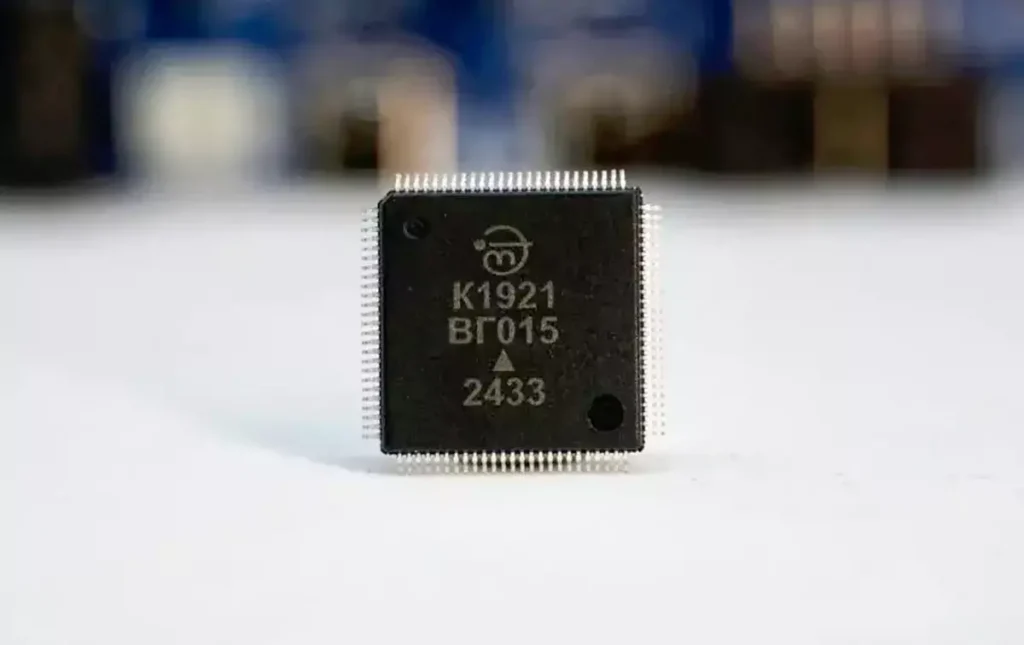
JSC NIIET (part of Element Group, MOEX: ELMT) has started mass commercial supplies of its K1921VG015 32-bit microcontrollers based on the open RISC-V architecture to Russian electronics manufacturers.
The integrated circuits can be used in measuring units, gas and electricity meters, industrial automation systems, medical equipment, and other energy-efficient embedded devices.
The initiation of these supplies marks the next phase in the product’s lifecycle, following successful mass production scale-up and the commissioning of an in-house chip packaging facility. In February 2025, NIIET manufactured its first commercial batch of chips in plastic packages at its own facility. The product packaging is carried out completely on the institute’s own assembly line. Over its first year of operation, the facility achieved a total output of approximately 1.5 million units, while the line’s projected capacity reaches up to 10 million units per year.
The K1921VG015 is NIIET’s flagship ultra-low-power 32-bit microcontroller based on the open RISC-V architecture. Engineered for energy-efficient embedded devices, it is well-suited for resource metering systems, instrumentation, industrial automation, medical technology, and other application-specific solutions. The chip is officially included in the Unified Registry of Russian Radioelectronic Products in compliance with Government Decrees No. 719 and No. 878.
“In its new domestic microcontroller development projects, NIIET is transitioning to computing cores based on the RISC-V architecture. Its open, modular, and scalable structure enables the creation of tailored solutions for specific tasks—ranging from low-power sensor controllers and smart meters to edge computing devices, networking equipment, and multi-core processors. This approach facilitates the expansion of our product lineup on a unified technological foundation, sharing common development tools, engineering, and educational support,” noted Ivan Fefilov, Advisor to the General Director of NIIET.
The mass production of domestic RISC-V-based microcontrollers establishes a practical foundation for the development of the open processor architecture in Russia. Its widespread adoption requires an accessible electronic component base, development and debugging tools, software, engineering expertise, and industry-specific deployment scenarios.
These areas are actively driven by the Russian RISC-V Alliance, which unites computing hardware and software developers, microelectronics manufacturers, universities, and research organizations. The Alliance’s founders include YADRO, Baikal Electronics, Syntacore, Astra Group, Novator, and MIET. Within the Alliance’s ecosystem, several participants are developing RISC-V-based microcontrollers: alongside NIIET, Baikal Electronics manufactures the commercially available Baikal-U (BE-U1000) 32-bit microcontroller designed for industrial automation, robotics, smart meters, I/O devices, and Internet of Things (IoT) solutions.
“The mass supplies of Russian RISC-V microcontrollers demonstrate that the architecture is already becoming the cornerstone for applied microelectronic solutions. The next phase involves developing the ecosystem around the products themselves: software and debugging tools, educational programs, industry standards, and ready-to-use application scenarios. The Alliance brings market participants together to address these challenges and establish a framework where electronics developers and manufacturers can systematically leverage RISC-V in their products,” noted Tatyana Sorokina, Executive Director of the Russian RISC-V Alliance.
The Alliance members address technological, industrial, educational, and legal frameworks related to the advancement of open processor architecture in Russia.