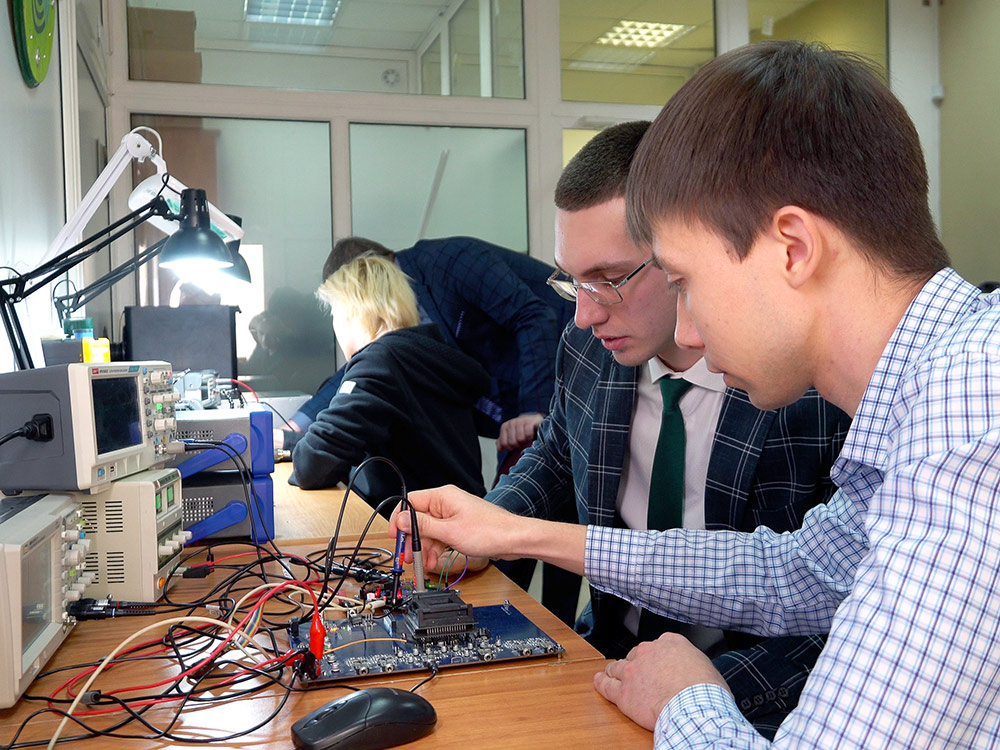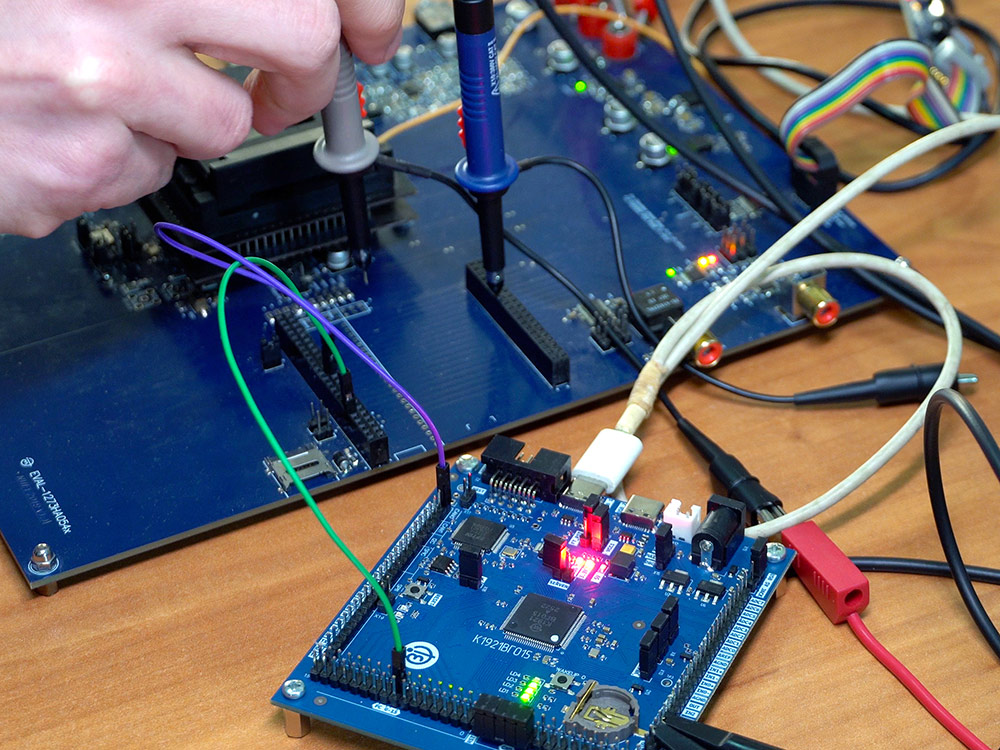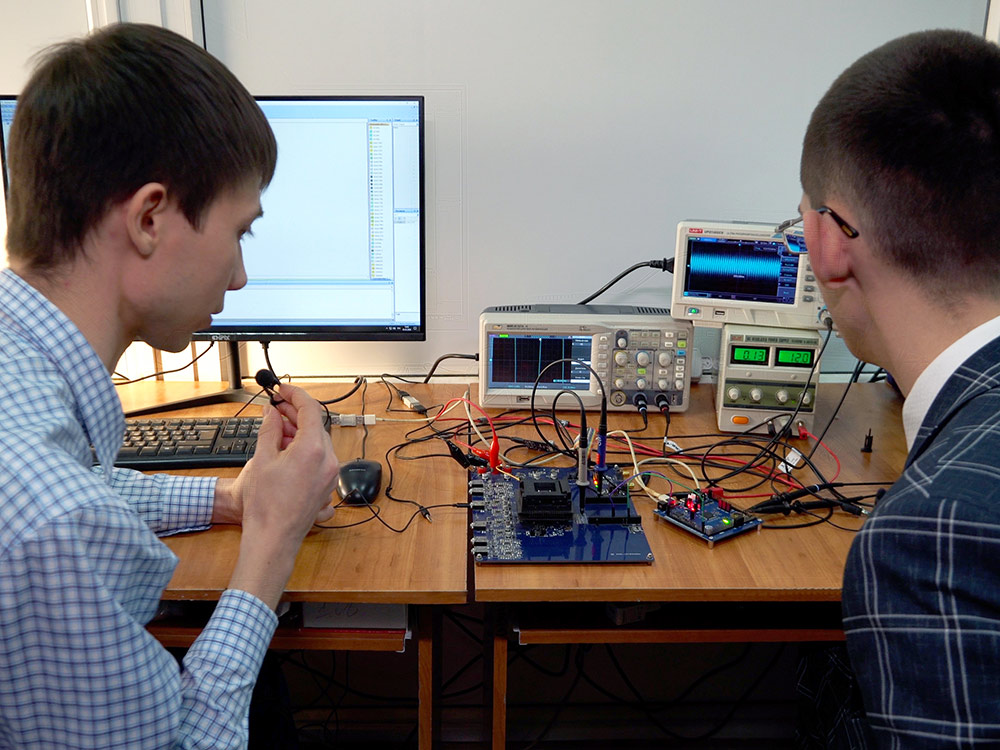
The Voronezh-based Scientific Research Institute of Electronic Technology (NIIET, part of the Element Group, MOEX: ELMT) is expanding the use of its products in educational environments and integrating its microchips into the practical training at Chelyabinsk State University (CSU).
The enterprise has been collaborating with universities in this capacity since 2025, and several thousand students have already gotten to know the 32-bit K1921VG015 microcontroller based on the RISC-V architecture.
Starting this academic year, CSU students are using the microcontroller for laboratory work and practical sessions focusing on peripheral blocks and the core. Previously, foreign chips were used in training, but the emergence of a high-performance domestic equivalent has allowed for a revision of the educational approach.
Similar work has been carried out in other regions. In the fall of 2025, the microchips and evaluation boards were handed to the Voronezh State University of Forestry and Technologies (named after G.F. Morozov). According to the teaching staff, switching to the Russian component base not only simplified the mastery of the material but also improved the quality of student works, which are already being used in competitive projects.
In Moscow, an introductory course utilizing the K1921VG015 was launched at the Kotelnikov Institute of Radio Engineering and Electronics (IRE) of the National Research University “MEI.” The microcontroller is used in laboratory and practical classes in a number of disciplines.
The selection of this specific product for the university environment is no coincidence. The K1921VG015 is based on the open RISC-V architecture, supports a wide range of peripherals, and offers flexible power consumption modes. These characteristics make the MCU suitable for a broad spectrum of tasks—from autonomous IoT devices to industrial and robotic automation. Educational materials for designers and teachers are continuously updated.
The product is included in the Registry of Russian Industrial Products (RF PP No. 719) and the Unified Registry of Radio-Electronic Products (RF PP No. 878).
For the Element Group, training highly qualified specialists in microelectronics is a key part of the strategy to develop the industry in Russia. Using domestic microcontrollers in student work allows them to gain hands-on experience with current technologies, thereby enhancing the quality of education.