The RISC-V Alliance, in partnership with JSC NIIET (part of the Element Group, MOEX: ELMT) and “Zeleny Robot” Company (“AROSSA” LLC), has showcased a landmark example of import substitution within the agro-industrial sector. Components developed using the Russian K1921VG015 microcontroller have enabled the localization of irrigation machines to reach 84% under Government Decree No. 719, granting agricultural producers’ essential access to government grants.
The journey began at the “Microelectronics 2022” forum. Since 2015, “Zeleny Robot” had been developing its own electronics, originally relying on STM chips. Initial attempts to switch to domestic Cortex analogues were unsuccessful, leading to a temporary shift to Chinese components. However, a strategic shift to the Element Group and NIIET provided the necessary breakthrough.
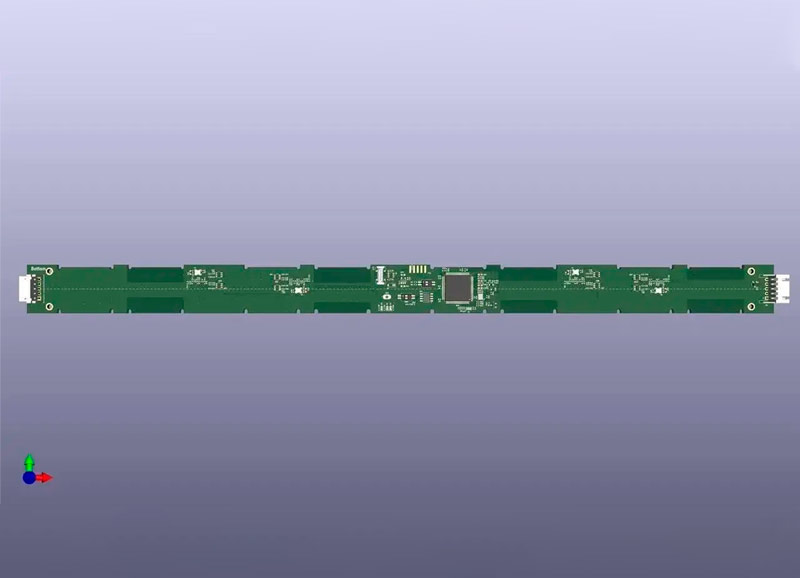
By 2025, this collaboration resulted in a high-precision soil moisture sensor based on the Frequency Domain Reflectometry (FDR) method. Driven by the K1921VG015 (based on RISC-V architecture), the sensor allows for non-contact moisture measurement at various soil depths.
Simultaneously, control units and signaling modules by “Zeleny Robot” were accredited under Government Decree No. 719 and became fully domestic products. For irrigation machinery manufacturers, integrating these domestic modules added critical localization points, bringing the final score to 84%.
Strategic Impact
The significance extends beyond individual modules. When the “brain” of the control system becomes domestic, the entire large-scale machine is effectively localized. Microelectronics is now a direct driver of industrial status and eligibility for government support.
The company is currently launching a production line for agricultural automation cabinets. As low-voltage switchgear with microcontroller-based control, these cabinets can provide up to 11 localization points, making the use of a domestic microcontroller a mandatory requirement for machinery accreditation.
The Conclusion
Evgeny Korostelev, Executive Director and Chief Designer of “AROSSA” LLC, explains:
“Today, a domestic microcontroller costing approximately $6 can determine whether an irrigation machine worth over $135,000 is officially classified as domestic. For the customer, this status unlocks access to government grants. For us, it is the key to securing a leading position in agricultural automation.”
JSC NIIET extends its gratitude to its partners for their contribution to the advancement of domestic microelectronics and remains open to new projects where open architecture drives genuine import substitution.