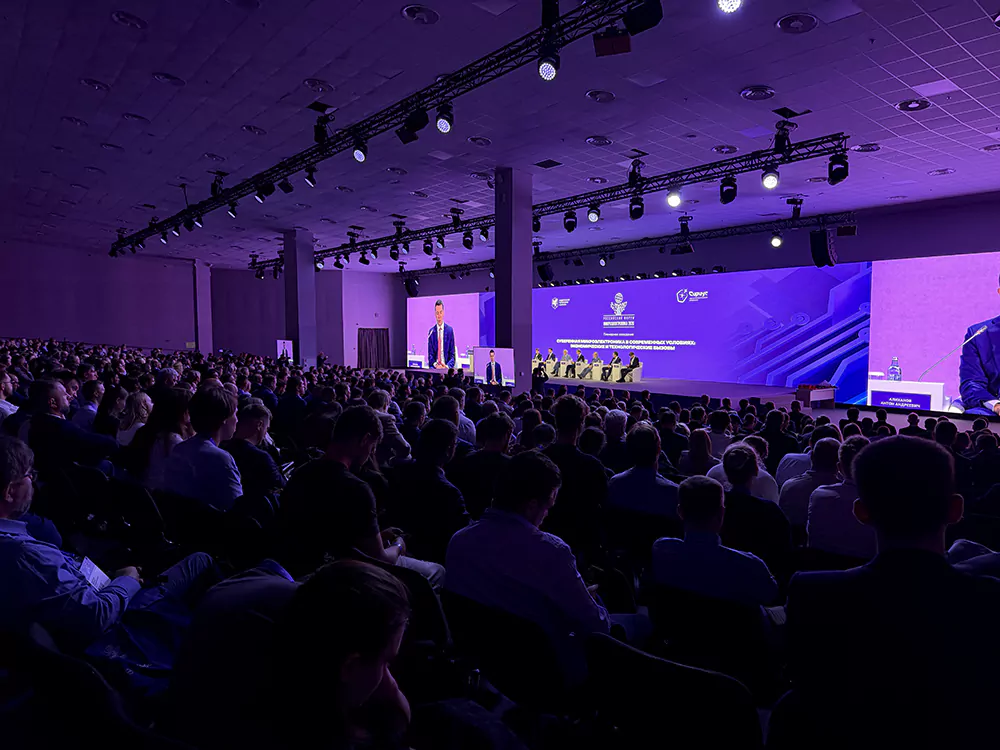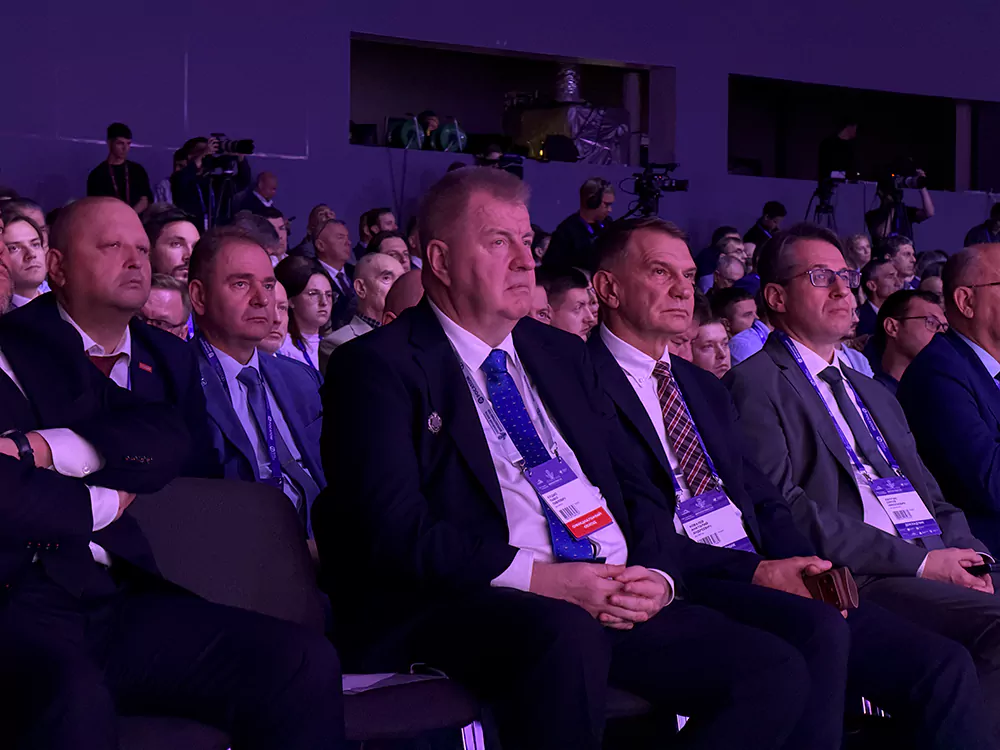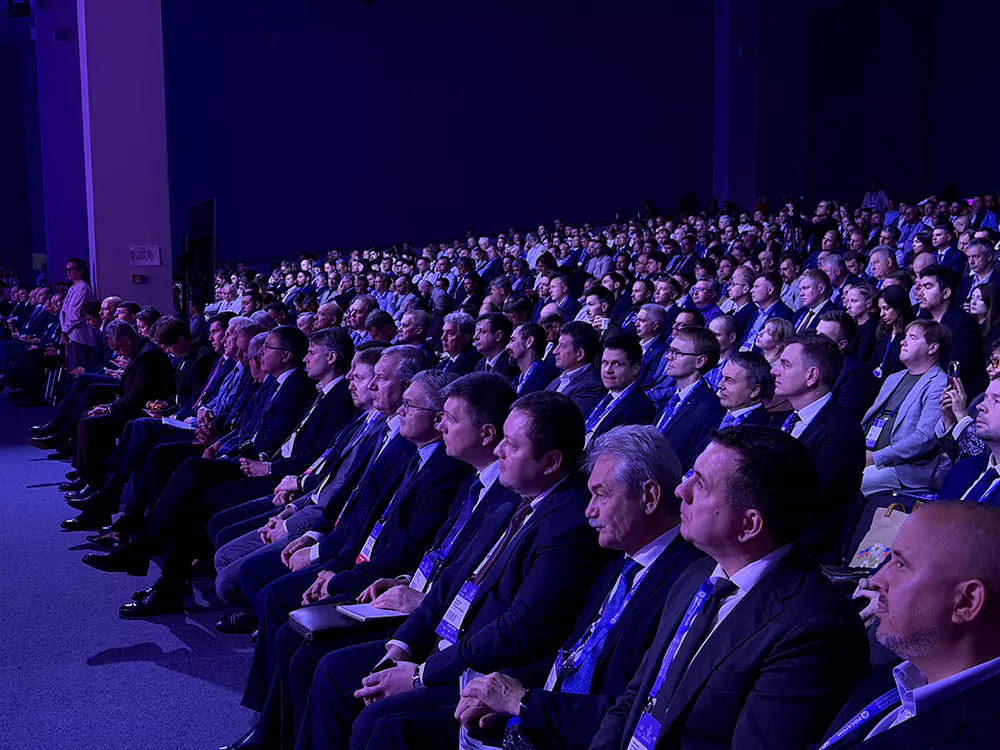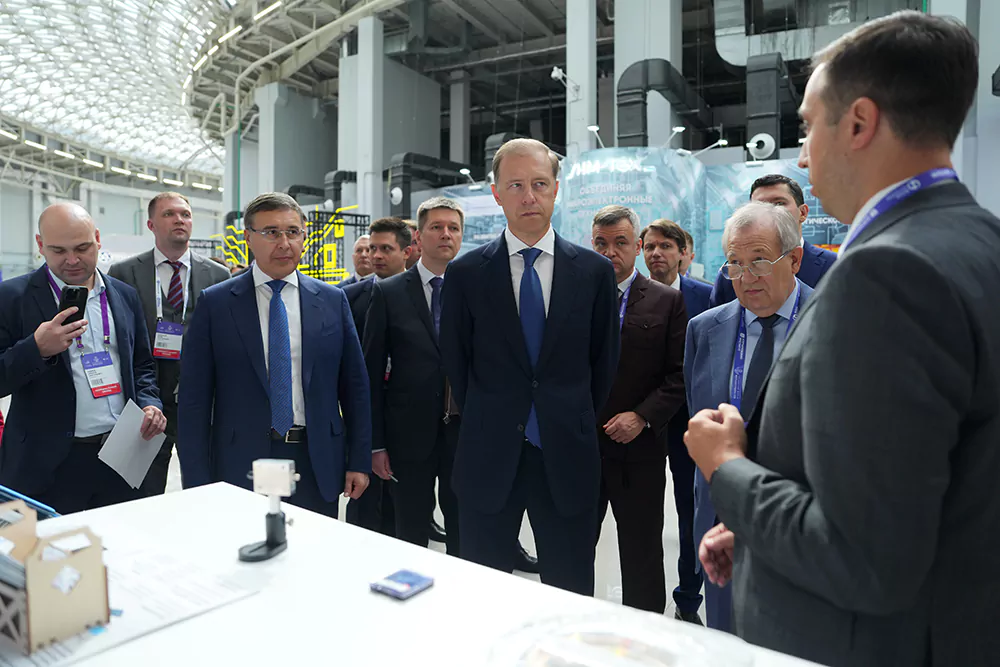
The “Microelectronics 2026” forum has started its work at the “Sirius” University of Science and Technology. Today, leading representatives of the industry and government agencies have gathered here.
The forum is attended by Denis Manturov, First Deputy Prime Minister of the Russian Federation; Andrey Fursenko, Assistant to the President of the Russian Federation; Gennady Krasnikov, President of the Russian Academy of Sciences (RAS); Anton Alikhanov, Minister of Industry and Trade of the Russian Federation; Valery Falkov, Minister of Science and Higher Education of the Russian Federation; Dmitry Bakanov, General Director of the Roscosmos State Corporation; and Elena Shmeleva, Chairperson of the Council of the “Sirius” Federal Territory.
The plenary session of the “Microelectronics 2026” forum opened with a speech of Mikhail Mishustin, Prime Minister of the Russian Federation, addressed to the participants.
“The forum brings together representatives of science, education, government, and business at the “Sirius” University platform to exchange knowledge and ideas, as well as to find reliable partners and establish cooperative ties. This year, around 140 leading Russian companies presented their most advanced technologies, developments, and ideas at their booths, including complex industrial equipment, innovative materials, digital systems, and software for modeling physical processes in designing competitive electronic products. In total, over 2,500 specialists will participate in the scientific conference, discussions, and exhibition, including colleagues from friendly nations: Belarus, China, India, Vietnam, and Kazakhstan,” Mikhail Mishustin noted.
According to the Prime Minister of the Russian Federation, the industry faces the most serious challenges today. The President has specifically emphasized the need to develop measures to create a domestic technological platform in the field of microelectronics.
In his speech at the “Microelectronics 2026” forum, First Deputy Prime Minister Denis Manturov noted that over the past 5 years, the production volume of domestic radio-electronics has almost doubled, and the number of items in the unified register has increased tenfold. These figures represent the expansion of the Russian supply. From electronic components to complex modules and hardware-software systems, it is vital that this growth strengthens the industry’s technological sovereignty. To achieve this, more than 100 development projects in the field of equipment and materials are currently underway.
“Supporting demand must be complemented by the development of the production base. A key role here should be played by the joint microelectronics company being established: it will have to consolidate the industry’s resources and capacities, building a full cycle from development to mass production. All these designated tasks require steady financial support. In addition to R&D funding, we need to make wider use of subsidized loans, leasing, and tax instruments, as well as help enterprises launch their first batches. Our strategic task is to enable companies to clearly plan their work for years ahead, relying on confirmed demand, ready production capacities, and clear project economics. This will allow us to consistently build technological independence across key areas of microelectronics,” Denis Manturov stated.
The “Microelectronics 2026” forum will run until October 3, featuring round tables, seminars, presentations of new technological solutions, and substantive scientific discussions with the participation of leading Russian scientists. The final outcome of the forum will be the consolidation of practices and the formulation of proposals for government authorities aimed at developing the electronic industry.